
Korean Skincare Routine for Beginners: A Simple 7-Step Guide
This post may contain affiliate links. If you purchase through these links, we may earn a small commission at no extra cost to you. See our full disclosure.
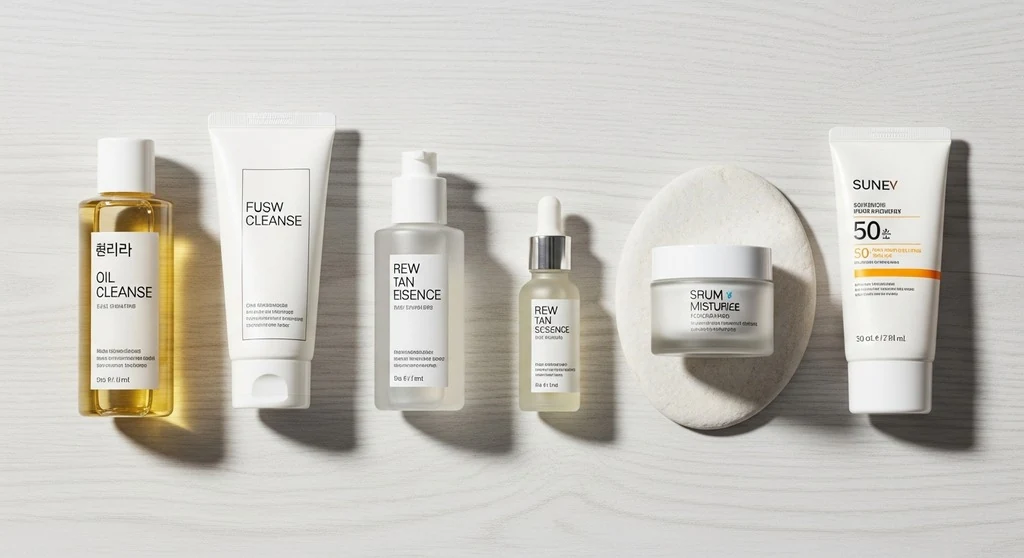
A Korean skincare routine for beginners comes down to seven steps applied in order from thinnest to thickest texture: oil cleanser, water-based cleanser, toner, essence, serum, moisturizer, and sunscreen. You do not need all seven steps every day — the morning routine drops to five, and you can start with as few as three or four products while your skin adjusts. The goal is layered hydration that builds over time, not a complicated ritual you dread every night.
Quick Summary
- Steps: 7 (PM full routine) · 5 (AM routine — skip oil cleanser and heavy serums)
- Time: ~5–10 minutes once familiar
- Starter budget: $40–80 USD for a full beginner set
- Best for: All skin types — adjust product choices, not the step order
- Key principle: Thin → thick texture layering; water-based before oil-based
- Caution: Introduce one new product at a time (wait 1–2 weeks) to isolate reactions
- Expected timeline: Noticeable hydration improvement within 1–2 weeks; texture and tone changes at 4–8 weeks
Why 7 Steps? The Logic Behind K-Beauty Layering
The multi-step approach is not about using more products for the sake of it — it is about delivering hydration and actives in thin, absorbable layers rather than one heavy cream.
Korean skincare philosophy treats the skin barrier as something to be supported, not stripped and rebuilt. Each layer serves a distinct function: cleaning, prepping, hydrating, treating, sealing. When products are applied thin-to-thick, each layer absorbs more efficiently because it is not fighting through a heavier texture above it. This is why a watery toner goes on before a viscous essence, and why a rich cream comes last to lock everything in.
The 7-step count is a simplified version of the traditional 10-step routine that gained popularity around 2015. Most dermatologists and experienced K-beauty users now agree that 7 steps covers the essential functions without redundancy. You can absolutely start with fewer — three or four products — and build up over weeks as you learn what your skin responds to.
[IMAGE: Infographic showing the 7-step routine order from thinnest to thickest product texture with arrows]
The 7 Steps Explained
Each step has a specific job. Understanding the purpose helps you substitute products and skip steps intelligently when you are short on time.
Step 1: Oil Cleanser (PM Only)
Oil dissolves oil. This step removes sunscreen, makeup, and the sebum that built up during the day — things a water-based cleanser alone cannot fully break down. Apply to dry skin, massage for 30–60 seconds, then emulsify with a splash of water before rinsing. If you wore no sunscreen or makeup, you can skip this step.
Step 2: Water-Based Cleanser
This is the “double cleanse” partner. A gentle foam or gel cleanser removes any remaining residue, sweat, and water-soluble impurities. Look for a low pH formula (around 5.0–6.0) to avoid stripping your acid mantle. Avoid anything that makes your skin feel tight or squeaky — that means the cleanser is too harsh.
Step 3: Toner
Korean toners are not the astringent, alcohol-heavy toners common in Western skincare. K-beauty toners are hydrating liquids that rebalance your skin’s pH after cleansing and prep it to absorb the next layers more effectively. Pat it into skin with your hands — cotton pads waste product.
Step 4: Essence
The signature K-beauty step. Essences are lightweight, watery concentrates that deliver a first wave of hydration and often contain fermented ingredients or snail mucin for skin repair. This is the step that makes the biggest difference for people transitioning from a basic Western routine — it adds a hydration layer that moisturizer alone cannot match.
Step 5: Serum or Ampoule
Serums are your targeted treatment step. This is where you address specific concerns: vitamin C for brightening, niacinamide for pores, hyaluronic acid for deep hydration, or retinol for anti-aging (PM only). Use one or two serums maximum — layering too many actives increases irritation risk without proportional benefit.
Step 6: Moisturizer
A cream or gel moisturizer seals in everything you applied in steps 3–5. Oily skin types do better with gel or gel-cream textures; dry skin benefits from richer creams with ceramides or shea butter. This step is non-negotiable for every skin type — even oily skin needs a moisturizer to prevent the overproduction of sebum that happens when skin is dehydrated.
Step 7: Sunscreen (AM Only)
The most important step in any skincare routine. Korean sunscreens are widely regarded as the most cosmetically elegant on the market — lightweight, no white cast, often with a slightly dewy or matte finish. Apply as the final step every morning, even on cloudy days. Without sun protection, the actives in your serums (especially vitamin C and retinol) lose much of their effectiveness, and UV damage undoes your hydration work.
AM vs PM Routine
The morning routine is shorter because your skin is already clean from the night before — you are prepping and protecting, not deep-cleaning.
| Step | AM Routine | PM Routine |
|---|---|---|
| 1. Oil Cleanser | Skip | Yes — removes sunscreen & makeup |
| 2. Water-Based Cleanser | Gentle rinse or micellar water | Yes — full cleanse |
| 3. Toner | Yes | Yes |
| 4. Essence | Yes | Yes |
| 5. Serum | Vitamin C or niacinamide | Retinol or treatment actives |
| 6. Moisturizer | Lighter gel or gel-cream | Richer cream |
| 7. Sunscreen | Yes — SPF 50+ PA++++ | Skip |
If you are just starting out, the AM routine (water cleanser → toner → moisturizer → sunscreen) is the minimum viable routine. Add the PM oil cleanse and essence when you are ready. The serum step can wait until you have identified a specific skin concern you want to target.
[IMAGE: Side-by-side comparison graphic of AM 5-step routine and PM 7-step routine with product silhouettes]
Beginner Product Picks Per Step
These are widely available, well-reviewed starter products that work across most skin types. Prices reflect typical US retail as of mid-2026 — check current listings before purchasing.
| Step | Product | Approx. Price (USD) | Why It Works for Beginners |
|---|---|---|---|
| Oil Cleanser | Banila Co Clean It Zero Cleansing Balm | $17–22 | Balm format is less messy than liquid oil; rinses clean without residue |
| Water Cleanser | COSRX Low pH Good Morning Gel Cleanser | $10–14 | pH 5.0–6.0; gentle enough for daily use; does not strip |
| Toner | Klairs Supple Preparation Unscented Toner | $15–22 | Fragrance-free; hydrating without stickiness |
| Essence | COSRX Advanced Snail 96 Mucin Power Essence | $15–25 | 96% snail mucin; hydrates and supports barrier repair; minimal ingredient list |
| Serum | Beauty of Joseon Glow Serum (Propolis + Niacinamide) | $12–18 | Brightening + hydration in one step; well-tolerated by sensitive skin |
| Moisturizer | ILLIYOON Ceramide Ato Concentrate Cream | $15–22 | Ceramide-rich; dermatologist-tested; works for dry and sensitive skin |
| Sunscreen | Beauty of Joseon Relief Sun: Rice + Probiotics SPF50+ PA++++ | $12–18 | No white cast; lightweight; sits well under makeup |
A full set of these products runs roughly $95–140 at retail, but each one lasts 2–4 months with daily use, which brings the monthly cost to about $25–40. You do not need to buy everything at once. Start with the cleanser, moisturizer, and sunscreen, then add a toner and essence in week two or three.
Common Mistakes Beginners Make
Most early frustrations with K-beauty routines come from enthusiasm, not the products themselves. Slow onboarding prevents nearly all of these issues.
- Introducing too many products at once. If you start five new products on the same day and break out, you have no idea which one caused it. Add one product at a time and wait 1–2 weeks before introducing the next.
- Skipping sunscreen. Every active ingredient in your routine — vitamin C, niacinamide, retinol — works less effectively or causes more sensitivity without daily SPF. This is the step that protects your investment in everything else.
- Over-cleansing. Double cleansing is for PM only. In the morning, a gentle water-based cleanser or even just a water rinse is enough. Stripping your skin twice a day damages the barrier you are trying to build.
- Using actives too early. Get your basic hydration routine stable for 3–4 weeks before adding exfoliating acids or retinol. Your skin barrier needs to be healthy before it can handle potent actives without irritation.
- Applying products on wet skin unintentionally. Toner on damp skin is fine — it helps absorption. But serums and creams applied to dripping-wet skin get diluted and may not absorb properly. Pat your face until it is damp, not wet, before each layer.
- Expecting overnight results. Hydration improves within days, but changes to texture, tone, and acne marks take 4–8 weeks of consistent use. Set a realistic timeline and resist the urge to switch products every week.
[IMAGE: Before-and-after skin texture comparison showing hydration improvement after 4 weeks of consistent Korean skincare routine]
Adjusting for Your Skin Type
The 7-step order stays the same regardless of skin type — what changes is the product texture and active ingredients you choose at each step.
Oily or Acne-Prone Skin
Use gel or water-based textures at every step. Skip heavy cream moisturizers in favor of gel-creams. For the serum step, niacinamide (pore-minimizing, oil-regulating) or a low-concentration BHA (salicylic acid 0.5–2%) works well. Avoid layering too many occlusive products — your skin already produces enough sebum to seal in moisture. Do not skip moisturizer entirely; a lightweight one prevents the rebound oil production that happens when oily skin gets dehydrated.
Dry or Dehydrated Skin
This is where K-beauty layering shines most. Use a hydrating toner (look for hyaluronic acid or beta-glucan), a snail mucin or fermented essence, and a ceramide-rich cream. You can even layer your toner two or three times (“7-skin method”) for extra hydration before moving to the essence step. In winter, consider adding a facial oil as a final step before moisturizer or mixed into it.
Sensitive or Irritation-Prone Skin
Minimize your ingredient count. Choose fragrance-free, essential-oil-free products at every step. Centella asiatica (cica) is a widely used K-beauty ingredient that may help calm redness and irritation — look for it in toners or moisturizers. Avoid vitamin C above 10% concentration and all exfoliating acids until your barrier is stable. Patch-test every new product on your jawline for 5–7 days before full-face application.
Combination Skin
Use the same routine everywhere but adjust application amounts. Apply lighter layers on your T-zone (forehead, nose, chin) and an extra half-pump of moisturizer on dry areas (cheeks, jawline). A gel-cream moisturizer is usually the best single-product compromise. If your T-zone is oily enough to cause midday shine, a mattifying sunscreen in the AM helps more than changing your whole routine.
FAQ
Do I need all 7 steps in a Korean skincare routine?
No. The 7 steps are a framework, not a strict rule. Many people start with 3–4 core steps (cleanser, toner, moisturizer, sunscreen) and add essences or serums as their skin adjusts. Doing fewer steps consistently is more effective than doing all seven sporadically.
How long does a 7-step Korean skincare routine take?
About 5–10 minutes once you are familiar with the products. The morning routine is faster because you skip oil cleansing and some treatment steps. Most of the time is just waiting 30–60 seconds between layers for absorption.
Can I mix Korean and Western skincare products in the same routine?
Yes. The routine order is based on texture and function, not brand origin. A Korean toner works fine before a Western vitamin C serum. The key rule is thin-to-thick layering and checking that active ingredients do not conflict — for example, avoid layering AHA with retinol in the same routine.
Bottom Line
The 7-step Korean skincare routine is a practical framework for anyone who wants healthier, more hydrated skin and is willing to spend 5–10 minutes a day on it. Start with the basics — cleanser, moisturizer, sunscreen — and expand at your own pace. If your skin is dry, dehydrated, or recovering from irritation, the layered hydration approach will likely make a noticeable difference within a few weeks. If you prefer a one-product-and-done approach and your skin is already in good shape, this level of layering may not be necessary for you — and that is perfectly fine.