Snail Mucin vs Hyaluronic Acid: Which Hydrator Wins?
FTC note: This article may contain affiliate links, which means K-Glow Insider may earn a commission if you buy through our links at no extra cost to you.
Hyaluronic acid is the better choice if you want a lightweight, easy-to-layer hydrator for most skin types, especially oily, combination, or acne-prone skin. Snail mucin is better if you want hydration with a cushioned feel, a smoother-looking texture, and a dewy K-beauty finish. In many routines, the best answer is to use hyaluronic acid for water-binding hydration and add snail mucin when skin feels rough, tight, or dull.
Quick Answer
| Ingredients | Snail mucin is usually listed as snail secretion filtrate. Hyaluronic acid may appear as hyaluronic acid, sodium hyaluronate, or hydrolyzed hyaluronic acid. |
|---|---|
| Main benefits | Snail mucin may help skin look smoother and bouncier. Hyaluronic acid helps attract and hold water in the skin’s surface layers. |
| Best skin types | Snail mucin suits dry, dull, or texture-focused routines. Hyaluronic acid suits dehydrated, oily, combination, and sensitive-leaning routines. |
| Use caution if | You react to botanical extracts, preservatives, fragrance, or animal-derived ingredients. Patch test before applying either product widely. |
| Expected result time | Hydration can feel immediate. Smoother-looking texture or calmer-looking skin usually takes 2 to 4 weeks of consistent use. |
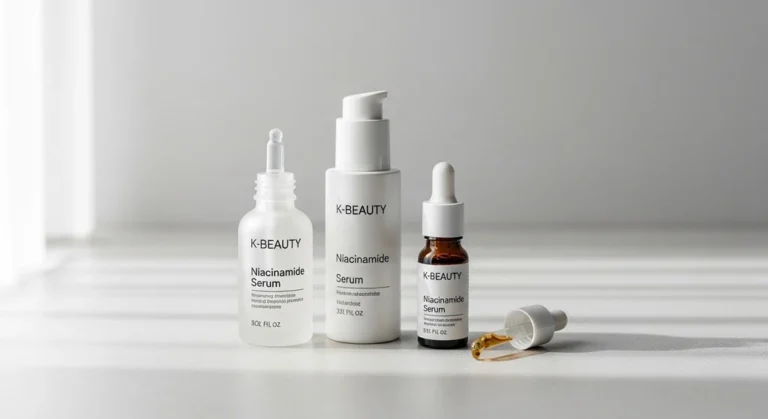
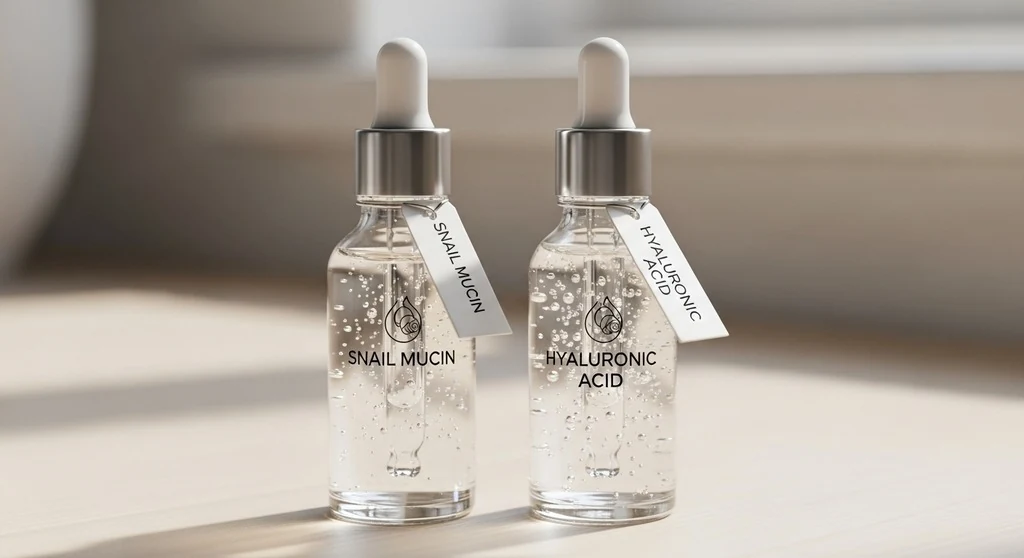
[IMAGE: Snail mucin essence and hyaluronic acid serum textures swatched on a clear surface for a K-beauty hydration comparison]
What Each Ingredient Does
Hyaluronic acid is a straightforward humectant, while snail mucin is a broader skin-conditioning ingredient. That difference matters because one mainly supports water-binding hydration, while the other adds a more cushioned, smoothing feel.
Hyaluronic Acid
Hyaluronic acid naturally occurs in the body and is widely used in skincare because it binds water and helps skin look temporarily plumper and more flexible. In a K-beauty routine, treat it as a hydration step, not a replacement for moisturizer.
Snail Mucin
Snail mucin, commonly labeled as snail secretion filtrate, is used for moisturizing, conditioning, and smoothing the skin. It tends to feel more elastic and cushiony than a basic hyaluronic acid serum, which is why many K-beauty users reach for it when their skin looks dull or feels slightly rough.
Snail Mucin vs Hyaluronic Acid: Key Differences
The biggest difference is texture and role: hyaluronic acid is a lightweight hydration tool, while snail mucin is a moisturizing essence with added skin-conditioning appeal. Choose based on how your skin feels after cleansing, not only on your skin type label.
| Category | Snail Mucin | Hyaluronic Acid |
|---|---|---|
| Best role | Cushioned hydration, glow, smoother-looking texture | Lightweight water-binding hydration |
| Typical texture | Essence-like, slightly stretchy, dewy | Watery gel, serum, toner, or cream |
| Best for | Dry, dull, rough-feeling, or barrier-stressed skin | Dehydrated, oily, combination, or layered routines |
| Potential drawback | Animal-derived source; may not suit very reactive users | Can feel tight if used without moisturizer in dry air |
| Routine fit | After toner, before cream | After cleansing or toner, before moisturizer |
This comparison makes the choice practical: pick hyaluronic acid when your routine already has enough richness and you only need water-light hydration. Pick snail mucin when your skin feels flat, tight, or uneven and you want a more substantial essence step without moving straight to a heavy cream.
Can You Use Them Together?
Yes, snail mucin and hyaluronic acid can be used together in the same routine. The main rule is to keep the layers thin and seal them with moisturizer.
Apply the lighter, more watery product first, then the thicker essence or serum. If both products feel tacky, use less instead of adding more layers. In the morning, finish with sunscreen; at night, finish with a moisturizer that helps reduce water loss.
Which One Is Right for Your Skin?
Choose hyaluronic acid if your skin is dehydrated but easily congested. Choose snail mucin if your skin needs hydration plus a softer, more conditioned finish.
Dry Skin
Snail mucin often feels more satisfying on dry skin because it gives a cushioned layer before cream. Hyaluronic acid can still help, but it should be followed by a moisturizer with barrier-supporting ingredients.
Oily or Combination Skin
Hyaluronic acid is usually easier to use because it hydrates without adding much weight. If you want to try snail mucin, use one pump or a thin layer and avoid stacking too many dewy products.
Sensitive-Leaning Skin
Hyaluronic acid is often the simpler first test because it appears in many minimal formulas. Snail mucin may still work well, but the full ingredient list matters, especially preservatives, fragrance, and plant extracts.
K-Beauty Product Picks
The most useful product choice is the one that fits your routine texture. A good hydrating serum should layer cleanly under moisturizer and sunscreen without pilling.
| Product type | Example product | Best match | How to use it |
|---|---|---|---|
| Snail mucin essence | COSRX Advanced Snail 96 Mucin Power Essence | Dry, dull, or texture-focused routines | Use after toner and before moisturizer, starting with a thin layer. |
| Snail mucin serum | Peach Slices Snail Rescue Intensive Serum | People who prefer a serum texture over a stretchy essence | Use before cream; avoid adding too many active serums at the same time. |
| Hyaluronic acid serum | Torriden Dive-In Low Molecular Hyaluronic Acid Serum | Dehydrated, combination, and lightweight routines | Apply to slightly damp skin, then seal with moisturizer. |
| Hyaluronic acid toner | Isntree Hyaluronic Acid Toner | Layered hydration without a heavy serum step | Use one layer after cleansing; add more only if your skin stays comfortable. |
If your routine already includes a rich moisturizer, a hyaluronic acid serum may be the cleaner addition. If your routine feels technically hydrating but your skin still looks tired or uneven, a snail mucin essence may deliver a more noticeable texture upgrade.
How to Use Them
Use both ingredients after cleansing and before moisturizer. The goal is to add hydration, then lock it in before it evaporates from the skin surface.
- Morning: Cleanser or rinse, hydrating toner, hyaluronic acid or snail mucin, moisturizer if needed, sunscreen.
- Night: Cleanser, toner, hyaluronic acid, snail mucin if using both, moisturizer.
- With actives: Keep exfoliating acids, retinoids, and vitamin C in separate steps if your skin gets irritated easily.
In dry indoor air, hyaluronic acid can feel tight if it is left unsealed. Snail mucin can feel sticky if applied too heavily, so one thin layer is a better starting point than several pumps.
Side Effects and Patch Testing
Both ingredients are commonly used in skincare, but either can cause irritation depending on the full formula. The safest approach is to patch test and introduce only one new product at a time.
The FDA notes that cosmetic allergic reactions can happen to anyone, and terms like “hypoallergenic” do not have a fixed federal standard. Stop using a product if you notice persistent redness, itching, swelling, burning, or worsening breakouts, and consider asking a dermatologist if symptoms continue.
FAQ
These questions usually decide whether snail mucin or hyaluronic acid makes more sense in a real skincare routine.
Is snail mucin better than hyaluronic acid for dry skin?
It can be, especially if your dry skin likes a cushiony essence texture. But very dry skin still needs a moisturizer on top of either ingredient.
Can you use snail mucin and hyaluronic acid together?
Yes. Apply the lighter hyaluronic acid product first, then snail mucin, then moisturizer.
Who should avoid snail mucin?
People who avoid animal-derived ingredients or have very reactive skin may prefer hyaluronic acid. Patch test before full-face use.
Bottom Line
Hyaluronic acid is the better everyday hydrator for most people because it is lightweight, flexible, and easy to layer. Snail mucin is worth considering if you want hydration with a smoother, dewier finish, but skip it if animal-derived ingredients or allergy concerns make it a poor fit.