Dry Skin vs Dehydrated Skin: What’s the Difference?
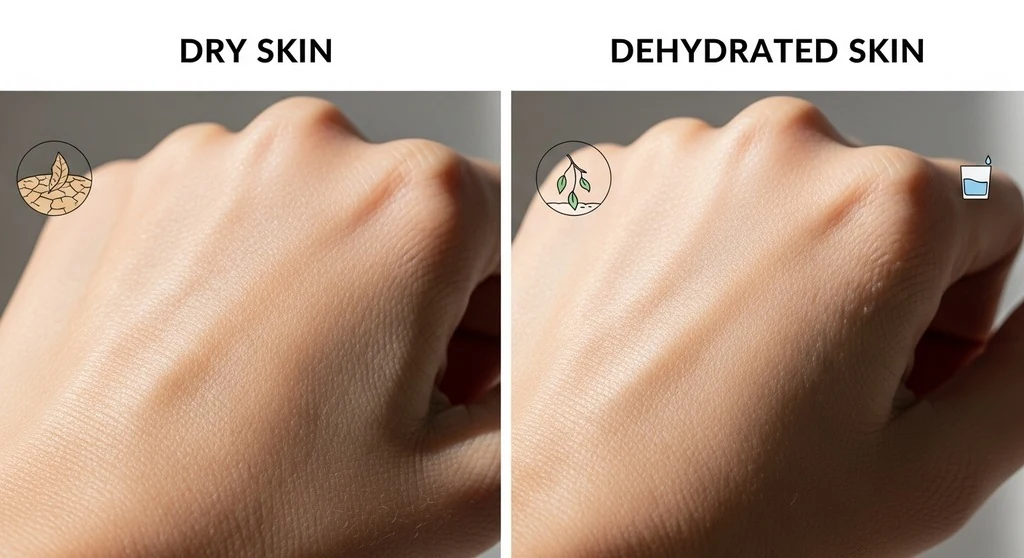
Dry skin lacks oil, while dehydrated skin lacks water. Dry skin is usually a skin type that often feels rough, flaky, or tight; dehydrated skin is a temporary condition that can affect any skin type, including oily and acne-prone skin.
FTC note: This post may contain affiliate links. If you buy through these links, K-Glow Insider may earn a commission at no extra cost to you.
Quick Summary
| Main difference | Dry skin is low in oil; dehydrated skin is low in water. |
|---|---|
| Common signs | Dry skin often flakes or feels rough. Dehydrated skin often looks dull, tight, or creased. |
| Best ingredients | Dry skin: ceramides, squalane, shea butter, panthenol. Dehydrated skin: glycerin, hyaluronic acid, beta-glucan, snail mucin. |
| Recommended skin types | Dry skin care suits naturally low-oil skin. Dehydration care suits any skin type that feels tight or looks tired. |
| Use caution if | Your skin burns, cracks, bleeds, or has eczema-like irritation; consider seeing a dermatologist instead of adding more actives. |
| Expected timing | Dehydration can look better within days; dry skin barrier support usually takes 2 to 6 weeks of consistent care. |
What Each Means
The easiest way to tell the difference is oil versus water. Dry skin does not produce or retain enough natural oil, while dehydrated skin is not holding enough water in the surface layers.
Dry Skin
Dry skin is usually a long-term skin type. It may feel tight after cleansing, look flaky around the nose or cheeks, absorb moisturizer quickly, and become more uncomfortable in cold or low-humidity weather.
For dry skin, a watery toner alone is rarely enough. You usually need a cream that combines humectants, emollients, and barrier-supporting lipids such as ceramides, cholesterol, fatty acids, squalane, or plant oils your skin tolerates.
Dehydrated Skin
Dehydrated skin is a condition, not a skin type. It can appear after over-cleansing, using too many exfoliating acids, traveling, sleeping in dry indoor air, or skipping moisturizer after hydrating serums.
Dehydrated skin can be confusing because it may feel tight but still look shiny. In that case, the goal is not to strip away oil; it is to restore water-binding ingredients and seal them with a lightweight moisturizer.
Key Differences
Dry skin and dehydrated skin can feel similar, but the right fix is different. Treating them as the same issue often leads to either a routine that feels too greasy or one that evaporates too quickly.
| Category | Dry Skin | Dehydrated Skin |
|---|---|---|
| Main issue | Not enough oil or lipid support | Not enough water in the skin surface |
| Can happen to oily skin? | Usually no; dry skin is a low-oil skin type | Yes, oily and combination skin can be dehydrated |
| How it feels | Rough, flaky, tight, sometimes itchy | Tight, dull, less bouncy, sometimes shiny |
| What helps most | Creams with ceramides, emollients, and occlusives | Hydrating layers with glycerin, hyaluronic acid, beta-glucan, or snail mucin |
| Routine mistake | Using only gel moisturizers or watery toners | Using harsh cleansers or skipping moisturizer after serum |
| Result timing | Gradual comfort and barrier improvement over weeks | Often feels better faster once water is replenished and sealed |
Use this comparison to decide what your routine is missing. If your skin flakes and never feels comfortable without a rich cream, focus on barrier support. If your skin feels tight by midday but still gets oily, keep the texture lighter and add water-binding layers before moisturizer.
Can You Have Both?
Yes, dry skin can also become dehydrated. This is common in winter, after over-exfoliation, or when a routine uses hydrating serums without enough cream to seal them in.
If you have both, your skin may feel rough and tight at the same time. A practical K-beauty routine would use a gentle cleanser, a hydrating toner or serum, a barrier cream, and sunscreen in the morning. At night, you can add a slightly richer cream or a thin occlusive layer on the driest areas if your skin tolerates it.
Which Routine Is Right for Your Skin?
Choose your routine based on what your skin lacks most, not by product category alone. A “hydrating” label does not always mean enough for dry skin, and a “rich” cream may feel too heavy for dehydrated oily skin.
Routine for Dry Skin
- Use a low-foam or cream cleanser instead of a stripping gel cleanser.
- Apply a hydrating toner or serum while skin is slightly damp.
- Choose a cream with ceramides, panthenol, squalane, or shea butter.
- Use sunscreen that does not leave your skin feeling tight by afternoon.
- Limit strong exfoliating acids until the barrier feels steady.
Routine for Dehydrated Skin
- Keep cleansing gentle, especially in the morning.
- Layer a humectant serum with glycerin, hyaluronic acid, beta-glucan, or snail mucin.
- Seal hydration with a gel-cream or lotion, even if your skin is oily.
- Avoid using an exfoliating toner, retinoid, and clay mask in the same short window.
- Watch indoor humidity, long hot showers, and travel-related dryness.
K-Beauty Product Picks
For K-beauty, the smartest choice is usually texture plus ingredient match. Dry skin benefits from cushiony creams, while dehydrated skin often does better with layered toners, essences, and lightweight moisturizers.
For Dry Skin
Look for barrier creams such as AESTURA Atobarrier 365 Cream, Dr. Jart+ Ceramidin Skin Barrier Moisturizing Cream, or Illiyoon Ceramide Ato Concentrate Cream. These types of formulas make sense when your skin feels under-oiled, flaky, or uncomfortable after washing.
For Dehydrated Skin
Look for hydrating layers such as COSRX Advanced Snail 96 Mucin Power Essence, Isntree Hyaluronic Acid Toner, or Round Lab Birch Juice Moisturizing Serum. These are better fits when the skin feels tight, dull, or temporarily creased but does not necessarily need a heavy cream.
For Both Dry and Dehydrated Skin
If you have both, use one hydrating layer and one barrier cream instead of adding several active treatments. A simple pairing, such as a humectant toner followed by a ceramide cream, is usually easier to tolerate than a crowded routine.
Common Mistakes
The biggest mistake is trying to fix tightness by adding more exfoliation. Tight, dull skin often needs less disruption, not more resurfacing.
- Using foaming cleanser twice daily: This can make both dryness and dehydration worse if the cleanser leaves your face squeaky.
- Layering hyaluronic acid without moisturizer: Humectants work better when sealed, especially in dry indoor air.
- Buying only rich creams for dehydrated oily skin: This can feel heavy without solving the water-loss issue.
- Ignoring stinging and peeling: Burning is not a sign that skincare is working; it may mean your barrier needs a break.
FAQ
These are the questions that usually decide whether you should change your cleanser, serum, or moisturizer first.
Can oily skin be dehydrated?
Yes. Oily skin can lack water, especially after harsh cleansing, frequent exfoliation, dry weather, or using acne treatments too aggressively.
Is hyaluronic acid enough for dry skin?
Usually no. Hyaluronic acid can help attract water, but dry skin also needs emollients and barrier-supporting ingredients to reduce that tight, under-oiled feeling.
Should I use face oil for dehydrated skin?
Face oil can help seal a routine, but it does not replace water-binding ingredients. If your skin is dehydrated, apply a hydrating toner or serum first, then moisturizer, and use oil only if your skin tolerates it.
Bottom Line
If your skin is naturally rough, flaky, and low in oil, treat it as dry skin with barrier creams and lipid support. If your skin feels tight, dull, or creased but still gets oily, treat it as dehydrated skin with humectants, gentle cleansing, and a moisturizer that seals without overwhelming your skin.
Sources: SELF: Dry Skin vs. Dehydrated Skin; Health: Skincare Routine for Dry Skin; Allure: Dry vs. Dehydrated Skin