AHA vs BHA: Beginner Guide to Chemical Exfoliants
This guide is for general skincare education, not medical advice. Chemical exfoliants can irritate skin if overused, so patch test first and pause if your skin burns, peels, or stings.
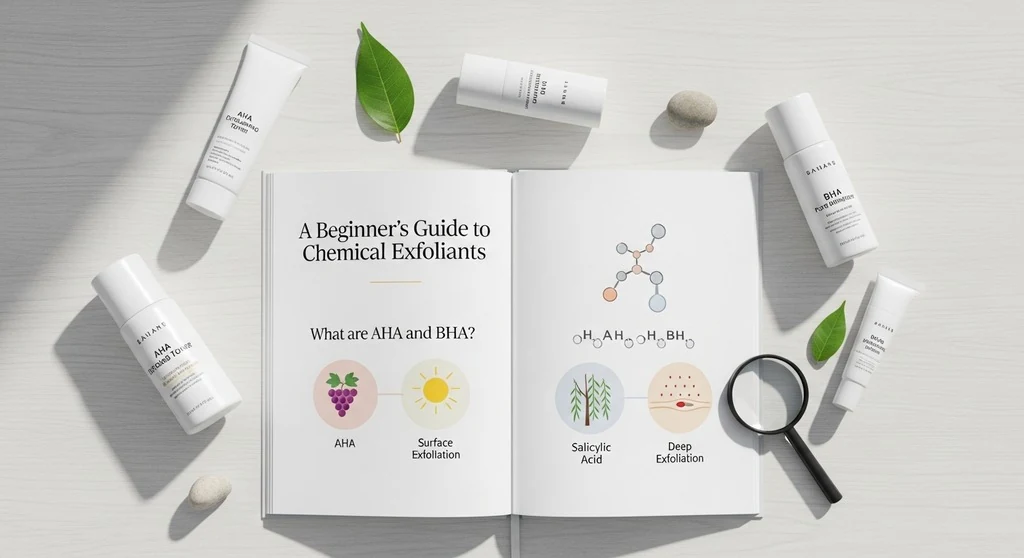
AHA and BHA are chemical exfoliants that help loosen old surface skin cells so skin can look smoother and feel less rough. Choose AHA if your main concern is dullness, uneven texture, or dry-feeling skin; choose BHA if your skin is oily, clogged, or blackhead-prone. Beginners should start with one low-frequency exfoliant, use it slowly, and apply sunscreen every day.
What AHA and BHA Are
AHA and BHA are acids used in skin care to support exfoliation, but they do not behave the same way on skin. The easiest beginner rule is this: think of AHA for surface smoothness and glow, and BHA for oily pores and congestion.
AHA stands for alpha hydroxy acid. Common examples include glycolic acid and lactic acid, both often used in toners, peeling gels, serums, and wash-off masks marketed for texture, tone, and fine-line appearance.
BHA stands for beta hydroxy acid, though in cosmetic shopping language it usually refers to salicylic acid. The FDA notes that salicylic acid is not technically a BHA from a chemist’s strict definition, but it is widely called BHA in the cosmetics industry and by consumers.
AHA vs BHA: Key Differences
AHA and BHA overlap in purpose, but the better choice depends on your skin type, your main concern, and how easily your barrier gets irritated. If you are unsure, choose the one that matches your most visible problem rather than using both right away.
| Feature | AHA | BHA |
|---|---|---|
| Common names | Glycolic acid, lactic acid, mandelic acid, citric acid | Salicylic acid |
| Best-known use | Surface texture, dullness, uneven-looking tone | Clogged pores, oily skin, blackhead-prone areas |
| Skin feel | Can feel smoothing but may sting on sensitive skin | Often lighter and more pore-focused, but still can irritate |
| Beginner frequency | 1 night per week, then increase only if skin is calm | 1-2 nights per week, especially on oily or congested zones |
| Sun caution | Important; AHA can increase UV-related sensitivity | Still use daily sunscreen, especially with any exfoliant routine |
Use this table as a sorting tool, not a rigid rule. A person with dry skin and clogged pores might use a gentle BHA only on the nose or chin, while someone with oily skin and rough cheek texture might alternate a mild AHA later after building tolerance. The main mistake is choosing based on trend instead of matching the acid to your skin’s current behavior.
How Chemical Exfoliants Work
Chemical exfoliants work by loosening the bonds that keep old surface skin cells attached. This can make skin feel smoother, but it also means the skin barrier needs time to adjust.
The American Academy of Dermatology describes chemical exfoliation as using ingredients such as alpha and beta hydroxy acids to dissolve dead skin cells. Unlike a scrub, an acid exfoliant does not need friction to work, which can be helpful for people who get redness from physical rubbing.
Strength is not only about the percentage printed on the bottle. The type of acid, concentration, pH, base formula, leave-on time, and added soothing ingredients all affect how strong a product feels in real use.
Who Should Use Each One
AHA is usually the better starting point for dull, rough, dry-feeling skin, while BHA is usually more practical for oily, clogged, or blackhead-prone skin. Sensitive skin can use either only if the formula is gentle and the schedule is conservative.
| Skin concern | Better first choice | How to approach it |
|---|---|---|
| Dullness or uneven texture | AHA | Start with lactic acid or a low-strength glycolic formula once weekly. |
| Oily T-zone and clogged pores | BHA | Apply to oily or congested areas instead of the whole face at first. |
| Dry but rough skin | Gentle AHA | Pair with a barrier-supporting moisturizer and avoid other actives that night. |
| Redness-prone or reactive skin | Neither at first, or very mild AHA/BHA | Patch test, use rarely, and stop if burning or redness persists. |
| Using retinol, retinoids, or benzoyl peroxide | Use caution | Do not stack exfoliating acids on the same night unless advised by a professional. |
This choice is less about having a perfect skin type label and more about reducing unnecessary irritation. If your skin is already dry, peeling, or uncomfortable from retinol, adding an acid may make the routine worse. If your skin is calm but congested, a low-frequency BHA can be a more focused first step than a strong all-over peel.
How to Use AHA and BHA Safely
Beginners should use AHA or BHA at night, start once a week, and keep the rest of the routine simple. The goal is steady tolerance, not visible peeling.
- Cleanse and dry your skin.
- Apply one AHA or BHA product as directed on the label.
- Follow with a plain moisturizer.
- Skip retinol, retinoids, benzoyl peroxide, scrubs, and other exfoliating products that same night.
- Use broad-spectrum sunscreen the next morning and every day after.
For many beginners, one to three nights per week is enough. If your skin feels tight, shiny, raw, or unusually stingy, reduce frequency or pause the product. More exfoliation does not automatically mean clearer or brighter skin.
K-Beauty Product Picks
For K-beauty beginners, look for moderate leave-on exfoliants, hydrating support ingredients, and clear usage directions. Avoid starting with multiple acid products in the same week.
For AHA Beginners
A low-strength lactic acid or gentle glycolic acid toner is usually easier to introduce than an aggressive peel. If your skin is dry, look for formulas that include humectants such as glycerin, panthenol, or hyaluronic acid so the product does not leave your routine feeling stripped.
For BHA Beginners
A leave-on BHA liquid or toner can be useful for an oily T-zone, nose pores, or chin congestion. Start by applying it only where you need it, then decide after a few weeks whether full-face use makes sense.
What to Check Before Buying
Check the acid type, percentage if disclosed, product pH if the brand provides it, leave-on versus wash-off directions, and whether the formula includes fragrance or alcohol if your skin reacts easily. For AHA products containing glycolic or lactic acid, the FDA notes that a cosmetic industry safety panel described consumer-use conditions of 10% AHA or less, final pH 3.5 or higher, and sun-sensitivity protection or directions.
Side Effects and When to Stop
Stinging for a few seconds can happen, but ongoing burning, redness, swelling, peeling, or worsening breakouts is a sign to stop. Chemical exfoliation should not leave your skin feeling injured.
The AAD advises extra caution if you already use products that can make skin sensitive or peel, including retinoids, retinol, and benzoyl peroxide. After exfoliating, moisturizer helps reduce dryness, and persistent irritation means the product or frequency is not a good fit.
Sun protection matters. FDA information on AHA products notes increased sensitivity to UV-related skin redness, so sunscreen, protective clothing, and limiting sun exposure are especially important while using AHAs and for a period after stopping.
FAQ
These are the beginner questions worth answering before buying your first exfoliating acid.
Can beginners use AHA and BHA together?
Usually, not at the start. Begin with one acid, use it once weekly, and wait until your skin stays calm before considering alternating products on different nights.
Is BHA better for acne-prone skin?
BHA is often useful for oily, clogged-pore-prone skin because salicylic acid is commonly used in pore-focused exfoliants. It is not a substitute for acne treatment if breakouts are painful, inflamed, or persistent.
Can I use AHA or BHA every day?
Some experienced users tolerate frequent use, but daily exfoliation is not necessary for many people. Beginners should build slowly and let skin comfort decide the schedule.
Bottom Line
Choose AHA if your main concern is dullness, rough texture, or uneven-looking tone; choose BHA if your main concern is oiliness, clogged pores, or blackheads. Hold off if your skin barrier is already irritated, you are overusing retinoids or acne actives, or you cannot commit to daily sunscreen.
Sources: FDA, Alpha Hydroxy Acids, content current as of November 22, 2022, checked July 2, 2026. FDA, Beta Hydroxy Acids, content current as of February 25, 2022, checked July 2, 2026. American Academy of Dermatology, How to safely exfoliate at home, updated February 6, 2026, checked July 2, 2026.