Best Korean Toner for Sensitive Skin: Gentle K-Beauty Picks
FTC note: This article may contain affiliate links. If you buy through them, K-Glow Insider may earn a commission at no extra cost to you.
The best Korean toner for sensitive skin is a gentle, fragrance-free hydrating toner that supports the skin barrier without feeling sticky, harsh, or stripping. For most sensitive skin types, look for panthenol, allantoin, centella, beta-glucan, hyaluronic acid, glycerin, or mineral-rich water, and be careful with strong exfoliating acids, essential oils, and heavy fragrance.
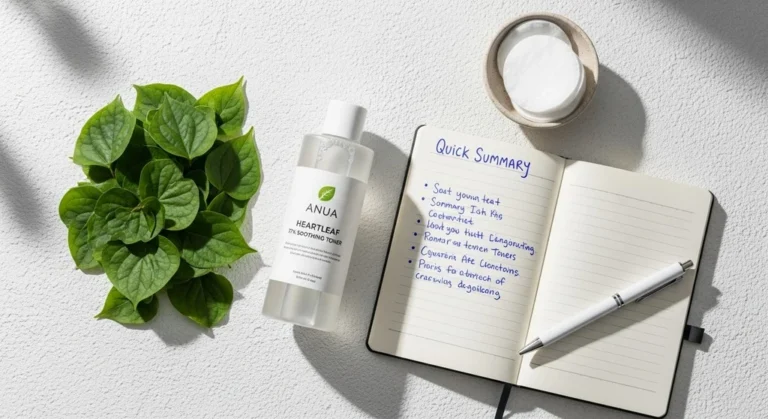
Quick Summary
- Best ingredients: panthenol, allantoin, centella asiatica, beta-glucan, glycerin, hyaluronic acid, heartleaf, and soothing mineral water.
- Main benefits: helps reduce tightness after cleansing, adds lightweight hydration, and prepares skin for serum and moisturizer.
- Best for: redness-prone, dry-sensitive, combination-sensitive, barrier-stressed, and retinoid-adjusting skin.
- Typical price range: about $14-$28 in the U.S., depending on retailer, size, and promotions.
- Cautions: do not introduce a new toner with several new products at once; patch test first if your skin reacts easily.
- Expected timing: comfort and hydration may improve right away; visible calmness usually takes 1-3 weeks of consistent use.
What to Look For
A sensitive-skin toner should feel more like a lightweight hydration step than an aggressive treatment. The formula matters more than the trend name printed on the bottle.
For sensitive skin, the safest starting point is a watery or slightly essence-like toner with a short ingredient list, no added fragrance, and no strong exfoliating claim. Ingredients such as panthenol, allantoin, centella, beta-glucan, and glycerin are useful because they support comfort and hydration without forcing the skin to tolerate a strong active.
If your skin stings from many products, skip toners with high acid blends, strong herbal fragrance, menthol-like cooling effects, or high amounts of drying alcohol. A toner should not burn to prove that it is working.
Best Korean Toners for Sensitive Skin
These Korean toners are good starting points because they focus on hydration, comfort, or barrier support instead of harsh resurfacing. Always check the current ingredient list before buying because formulas can change.
| Product | Best for | Texture | Why it fits sensitive skin | Watch out for |
|---|---|---|---|---|
| ETUDE SoonJung pH 5.5 Relief Toner | Reactive or barrier-stressed skin | Watery and light | Designed around a low-irritation concept with panthenol and madecassoside-style soothing support. | May feel too simple if you want rich hydration from one step. |
| Anua Heartleaf 77 Soothing Toner | Redness-prone, oily-sensitive, or combination skin | Fresh watery toner | Heartleaf-focused formula feels light and layers well under sunscreen or makeup. | Plant extracts can still bother some highly reactive skin, so patch test first. |
| Round Lab 1025 Dokdo Toner | Everyday hydration with a clean finish | Watery, non-heavy | Works well when you want a simple toner that softens the tight feeling after cleansing. | Not the most cushiony option for very dry skin on its own. |
| Pyunkang Yul Essence Toner | Dry-sensitive skin that dislikes watery toners | Slightly viscous essence-toner | Gives more slip and comfort than many watery toners without feeling like a heavy cream. | Use a small amount first; thicker textures can feel too much on oily skin. |
| COSRX Full Fit Propolis Synergy Toner | Dull, dry, or tight-feeling skin | Light essence texture | Propolis-based hydration can leave skin looking more comfortable and less flat. | Avoid if you are sensitive to bee-derived ingredients. |
If your skin is very reactive, start with the simplest, lightest option instead of the richest one. If your skin is dry but not easily congested, an essence-toner can make your moisturizer feel more comfortable without adding another heavy cream layer.
Which One Should You Choose?
Choose by your skin pattern, not by popularity. Sensitive skin can be oily, dry, acne-prone, or retinoid-stressed, and each version needs a slightly different toner texture.
If your skin turns red easily after cleansing, ETUDE SoonJung or Round Lab Dokdo are practical first choices. If you are oily-sensitive and want a clean finish, Anua Heartleaf is easier to fit into a daytime routine. If your skin feels tight by midday, Pyunkang Yul or COSRX Propolis may give a more cushioned feel.
For acne-prone sensitive skin, do not assume your toner has to exfoliate. A plain hydrating toner plus a separate, carefully chosen acne treatment is often easier to control than a toner that tries to hydrate, exfoliate, brighten, and treat bumps at the same time.
How to Use Korean Toner on Sensitive Skin
Use toner after cleansing and before serum or moisturizer. For sensitive skin, one thin layer is usually enough.
Apply with clean hands instead of a cotton pad if your skin is easily irritated, because rubbing can create extra redness. Press the toner in gently, wait until the skin feels damp rather than wet, then apply serum or moisturizer to seal in hydration.
Morning Routine
Cleanse lightly or rinse with water, apply toner, use a simple serum if needed, then finish with moisturizer and sunscreen. A watery toner works especially well in the morning because it does not interfere with sunscreen texture.
Night Routine
After cleansing, apply toner before barrier cream or on retinoid nights. If you use a prescription or over-the-counter retinoid, a gentle toner can help reduce tightness, but it should not sting.
Common Mistakes to Avoid
The biggest mistake is treating toner as the active step when your skin barrier is already stressed. Sensitive skin usually improves faster when the routine becomes calmer and more consistent.
- Layering too much: the “7 skin method” can feel soothing for some people, but it can overwhelm skin that reacts to repeated rubbing or too many humectant layers.
- Using acids daily: exfoliating toners can be useful, but they are not the best default choice for sensitive skin.
- Ignoring fragrance: a product can feel elegant and still be irritating if your skin dislikes fragrance or essential oils.
- Changing the whole routine: test one toner for at least 1-2 weeks before judging it, unless it causes burning, swelling, or clear irritation.
FAQ
These are the questions that usually matter before buying a Korean toner for sensitive skin.
Is Korean toner necessary for sensitive skin?
No. Toner is optional, but it can be useful if your skin feels tight after cleansing or if your moisturizer works better over damp skin.
Is Anua Heartleaf toner good for sensitive skin?
It can be a good fit for oily-sensitive or redness-prone skin because it feels light and soothing, but highly reactive skin should still patch test because botanical extracts are not automatically irritation-free.
Can toner repair a damaged skin barrier?
A toner can support hydration and comfort, but barrier repair usually needs a full routine: gentle cleansing, moisturizer, sunscreen, and fewer irritating actives.
Bottom Line
The best Korean toner for sensitive skin is the one that hydrates quietly, does not sting, and fits your skin type without adding unnecessary actives. Start with ETUDE SoonJung or Round Lab Dokdo for a simple barrier-friendly routine, Anua Heartleaf for oily-sensitive redness, and Pyunkang Yul or COSRX Propolis if your skin needs more cushion.
Source: Brand ingredient pages and product listings should be checked before purchase because K-beauty formulas and U.S. retailer stock can change.