How to Fade Acne Scars: K-Beauty Ingredients That Actually Work (PIH & PIE Guide)
How to Fade Acne Scars: K-Beauty Ingredients That Actually Work (PIH & PIE Guide)
The fastest way to fade acne scars with Korean skincare is to match the right active ingredient to the right type of mark — and then protect that progress with daily SPF 50+. Post-acne discoloration typically falls into two categories: flat brown marks (PIH) driven by excess melanin, and red or purplish marks (PIE) caused by damaged capillaries. K-beauty addresses both through well-formulated layering routines rather than any single product, and results require consistent use over 8 to 24 weeks depending on severity.
K-Beauty Acne Scar Fading: Key Facts at a Glance
- Target Types: Post-Inflammatory Hyperpigmentation (PIH — flat brown/dark spots) and Post-Inflammatory Erythema (PIE — red/purplish marks from capillary damage)
- Core Ingredients: Niacinamide, Vitamin C derivatives, Tranexamic Acid, AHA/BHA, Azelaic Acid, Centella Asiatica
- Strategy: Layer a brightening active in AM, a gentle exfoliant or second active in PM, and apply SPF 50+ PA++++ as the final morning step
- Timeline: PIH — visible improvement from 8–12 weeks; PIE — plan for 3–6+ months due to vascular repair
- Non-Negotiable: Sunscreen reapplied every 2–3 hours outdoors; skipping it reverses gains and darkens existing marks
- Limitation: Topical skincare cannot fill indented (atrophic) scars — those require professional procedures

Step Zero: Identify Your Mark Before Choosing an Ingredient
Matching treatment to mark type is the single decision that saves the most time and money in this category.
PIH and PIE look similar at first glance but respond to different ingredient pathways. PIH — the flat tan, brown, or dark spots left after a pimple heals — is a melanin issue. The skin overproduced pigment during the inflammatory response, and it now sits in the upper layers waiting to turn over. PIE, by contrast, is a vascular issue: the redness or purplish tint comes from dilated or damaged capillaries beneath the skin surface, not from pigment. Pressing a clean finger firmly against a red mark and watching it briefly go pale is a simple field test — if the color disappears under pressure and returns when you release, it’s more likely PIE than PIH.
This matters because niacinamide and Vitamin C work primarily on melanin transfer and production, making them better first picks for PIH. Azelaic acid and Centella Asiatica target inflammation and vascular-related redness, making them more relevant for PIE. Most people have a mix of both, so a layered routine tends to outperform any single-ingredient approach.
| Mark Type | Appearance | Root Cause | Primary Ingredients to Prioritize |
|---|---|---|---|
| PIH (Post-Inflammatory Hyperpigmentation) | Flat, tan to dark brown or black spots | Excess melanin production triggered by inflammation | Niacinamide, Vitamin C, Tranexamic Acid, AHA |
| PIE (Post-Inflammatory Erythema) | Red, pink, or purplish marks; fades under pressure | Dilated or damaged capillaries near the skin surface | Azelaic Acid, Centella Asiatica, Niacinamide |
| Atrophic Scars (Ice Pick, Boxcar, Rolling) | Indented or pitted texture | Loss of collagen during severe inflammation | Retinoids, Peptides (limited topical effect); professional procedures for significant improvement |
The Core K-Beauty Ingredients and How Each One Works
No single serum does everything — but choosing two or three complementary actives and using them consistently is more effective than cycling through every trending product on the market.
Niacinamide (Vitamin B3)
If I were building a routine from scratch for someone new to actives, niacinamide is where I’d start. It inhibits the transfer of melanosomes from pigment-producing cells to skin cells, meaning it prevents brown marks from forming and deepening rather than simply bleaching existing ones. At the same time, it reduces inflammation and supports barrier integrity — both of which matter for acne-prone skin that tends to be reactive. A 5% concentration is the documented sweet spot for efficacy without irritation; higher concentrations don’t necessarily deliver better results and can cause flushing in sensitive individuals.
Vitamin C — And Why Derivatives Matter in K-Beauty
Pure L-ascorbic acid inhibits tyrosinase, the enzyme responsible for initiating melanin synthesis, and it’s one of the most researched brightening compounds available. The tradeoff is instability: L-ascorbic acid oxidizes quickly and requires a pH below 3.5 to stay effective, which can be irritating for sensitive skin. Korean formulations have leaned heavily into stabilized derivatives as a practical alternative — Ascorbyl Glucoside and 3-O-Ethyl Ascorbic Acid convert to active Vitamin C after absorption, tolerate higher pH ranges, and remain stable in the bottle longer. For everyday use, derivatives are a reasonable trade-off; for those specifically targeting stubborn PIH and willing to manage pH timing, a well-formulated L-ascorbic acid at 10–20% is still the higher-ceiling option.
Tranexamic Acid
This ingredient gets less attention than Niacinamide or Vitamin C but is particularly useful for stubborn PIH and cases where UV-triggered pigmentation is a factor. Tranexamic Acid works by blocking the plasmin pathway that stimulates melanocytes, interrupting pigmentation at an earlier step in the process. Clinical studies support concentrations between 2–5% for topical use, and irritation rates are notably low — making it a practical choice for skin that doesn’t tolerate exfoliating acids well. It pairs cleanly with Niacinamide and can be layered alongside Vitamin C derivatives for a more comprehensive brightening stack.
AHA and BHA: Accelerating Turnover
Chemical exfoliants don’t brighten skin directly — they speed up the rate at which discolored surface cells shed, revealing fresher skin underneath. The practical difference between AHA options comes down to molecular size and skin sensitivity. Glycolic acid has the smallest molecule of the common AHAs, penetrates deeper, and delivers faster results — appropriate for normal to oily skin using it 2–3 nights per week. Mandelic acid has a significantly larger molecule, works more gradually, and is the better choice for reactive or sensitive skin types. Salicylic acid (BHA) is oil-soluble, which means it can clear debris inside pores rather than just on the surface; for anyone still dealing with active breakouts alongside post-acne marks, BHA handles both issues simultaneously. When combining Vitamin C with an AHA or BHA in the same evening routine, apply the Vitamin C serum first, allow 10–15 minutes for absorption before applying the exfoliant — this prevents pH interference that reduces effectiveness of both.
Azelaic Acid
Azelaic acid occupies a useful position in this category because it addresses both PIH and PIE while being gentle enough for daily use. It inhibits tyrosinase (similar to Vitamin C), has documented anti-inflammatory and antibacterial properties, and reduces vascular redness — making it one of the few single ingredients that covers both mark types. Prescription-strength formulas go up to 20%, but over-the-counter concentrations in the 10% range are well-tolerated and meaningful. For skin that can’t handle exfoliating acids, or as a daytime alternative to actives that require nighttime use, azelaic acid is a reliable option.
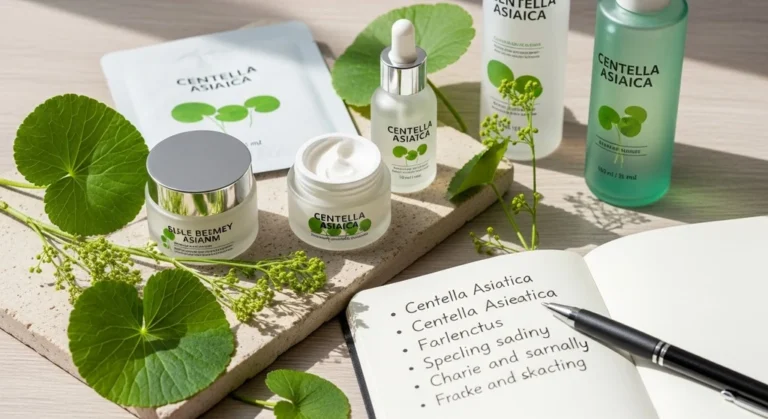
Centella Asiatica
The active compounds in Centella — primarily Madecassoside and Asiaticoside — support collagen synthesis and have consistent anti-inflammatory activity. For PIE specifically, reducing ongoing inflammation helps prevent further capillary damage while the existing marks heal. Centella doesn’t fade pigment directly, but its barrier-calming and redness-reducing role in a PIE-focused routine is significant enough that most Korean dermacosmetic brands include it alongside their brightening actives rather than positioning it as a standalone treatment.
| Ingredient | Best For | Mechanism | Concentration Range | Timing Note |
|---|---|---|---|---|
| Niacinamide | PIH, PIE, oily/acne-prone skin | Inhibits melanosome transfer; reduces inflammation | 4–10% (5% is a reliable starting point) | AM or PM; pairs with most actives |
| Vitamin C (L-AA or derivatives) | PIH, dullness, UV-induced pigmentation | Tyrosinase inhibition; antioxidant; collagen support | 10–20% L-AA; 1–3% for derivatives | Ideally AM; derivatives are more stable; wait before applying AHA/BHA |
| Tranexamic Acid | Stubborn PIH, UV-triggered pigmentation | Blocks plasmin pathway that activates melanocytes | 2–5% | AM or PM; low irritation; easy to layer |
| Glycolic Acid (AHA) | PIH, uneven texture, surface exfoliation | Breaks down intercellular bonds, accelerates cell shedding | 5–10% OTC | PM only; 2–3x per week; increases UV sensitivity |
| Mandelic Acid (AHA) | PIH, sensitive or reactive skin | Same as glycolic but larger molecule — gentler absorption | 5–10% | PM; suitable for daily use in sensitive skin |
| Salicylic Acid (BHA) | PIH with active acne, congested pores | Oil-soluble; clears pores; anti-inflammatory | 0.5–2% | AM or PM; can use daily at lower concentrations |
| Azelaic Acid | PIH, PIE, sensitive or rosacea-prone skin | Tyrosinase inhibition; anti-inflammatory; antibacterial | 10% OTC; 15–20% Rx | AM or PM; daily use is appropriate |
| Centella Asiatica | PIE, post-inflammatory redness, barrier repair | Anti-inflammatory (Madecassoside, Asiaticoside); collagen support | Standardized extract varies by brand | AM or PM; calming; supportive rather than primary treatment |

How to Build a Practical Layering Routine
The order in which you apply these products affects both absorption efficiency and irritation risk — and a few specific combinations need scheduling rather than simultaneous stacking.
A functional starting routine for someone addressing PIH and PIE might look like this: In the morning, apply a Niacinamide serum (5%) or a Tranexamic Acid serum after cleansing and toning, followed by moisturizer and then SPF 50+ PA++++. In the evening, use a Vitamin C derivative serum or Azelaic Acid, and on alternating nights (2–3 times per week), swap in a chemical exfoliant — either glycolic or mandelic acid depending on skin sensitivity. If you want to incorporate a retinoid for texture and collagen support, do not use it on the same night as AHA or BHA; alternate them on different nights to avoid compounding irritation. For those starting out, I’d suggest running with Niacinamide alone for the first four weeks before introducing any exfoliant, so you have a baseline for how your skin responds.
| Routine Slot | Step | Product Type | Notes |
|---|---|---|---|
| AM | 1 | Cleanser | Gentle, low-pH formula |
| AM | 2 | Brightening Serum | Niacinamide, Tranexamic Acid, or Vitamin C derivative |
| AM | 3 | Moisturizer | Centella Asiatica-based options support barrier and PIE simultaneously |
| AM | 4 | SPF 50+ PA++++ | ~1/4 tsp for face; reapply every 2–3 hours outdoors — this step is mandatory |
| PM | 1 | Cleanser | Double cleanse if wearing SPF or makeup |
| PM | 2 | Active Serum (nightly) | Azelaic Acid or Niacinamide; or Vitamin C serum (wait 10–15 min if followed by exfoliant) |
| PM (2–3x/week) | 3 | Chemical Exfoliant | AHA (glycolic or mandelic) or BHA (salicylic); alternate nights with retinoid if used |
| PM | 4 | Moisturizer | Heavier formula acceptable at night to support barrier recovery after exfoliation |
Realistic Timelines: What to Expect and When
The most common reason K-beauty scar routines stall is stopping too early — results here are measured in skin turnover cycles, not days.
Skin turns over roughly every four weeks. PIH improvement requires at least two to three full cycles for meaningful change to become visible, meaning 8–12 weeks is the realistic minimum before drawing conclusions. Marks that have been present for more than six months or have been repeatedly darkened by sun exposure will take longer. PIE is structurally different: because damaged capillaries need time to remodel rather than simply shedding pigmented cells, 3–6 months is a more honest timeline, and some marks at this end of the spectrum don’t fully resolve without vascular-targeted professional treatment. Progress tracking is easiest with consistent photos taken in the same lighting — what feels slow week to week often looks significant across a two-month comparison.
| Mark Type | Minimum Effective Timeline | Realistic Full-Course Timeline | When to Consider Professional Help |
|---|---|---|---|
| Mild PIH (recent, light marks) | 6–8 weeks | 3–4 months | If no change after 4 months of consistent use |
| Moderate to stubborn PIH | 10–12 weeks | 4–6 months | Chemical peels or laser toning can accelerate results |
| PIE (red/purplish vascular marks) | 8–12 weeks for early fading | 3–6+ months | Vascular lasers (e.g., IPL, pulsed dye laser) for persistent cases |
| Atrophic (indented) scars | Not significantly addressable topically | Retinoids over 6–12 months for minor texture | Microneedling, subcision, filler, or ablative laser required |
Who This Approach Works Best For — and Where It Has Limits
K-beauty ingredient routines are genuinely effective for flat discoloration but have real ceiling points depending on skin type and scar depth.
This approach works well for anyone dealing with PIH or PIE from mild to moderate acne who is willing to maintain a consistent daily routine. It suits people who want a lower-cost, gradual solution over professional procedures, or who are managing ongoing breakouts alongside post-acne marks. The limit is atrophic scarring: K-beauty’s strongest topical actives — retinoids, peptides — can produce modest texture improvements over a year or more, but ice pick and boxcar scars with significant depth require structural intervention that topical products cannot replicate. If the primary complaint is texture rather than color, setting expectations clearly before starting a topical-only routine saves time. The other group for whom this approach needs adjustment is anyone with Fitzpatrick skin types IV–VI, where PIH tends to be deeper and more persistent, and where certain AHA concentrations or Vitamin C derivatives may cause post-inflammatory darkening if introduced too aggressively — slower introduction at lower concentrations is particularly important here.
Frequently Asked Questions
- Can I use Niacinamide and Vitamin C together?
- Yes — the concern that Niacinamide deactivates Vitamin C is based on outdated research and applies to conditions (high heat, prolonged contact) not relevant to normal skincare routines. Using a Niacinamide serum in the morning and a Vitamin C serum in the evening is a clean and practical split. If you prefer using both in the same session, allow one to absorb before applying the other. The combination is complementary — they target melanin production at different pathway points.
- Why isn’t my Vitamin C serum working?
- Two common issues: oxidation and pH timing. L-ascorbic acid turns orange or brown when oxidized and loses efficacy — a discolored serum should be replaced. If you’re using a low-pH L-ascorbic acid product and applying it immediately after a toner or essence with a higher pH, you may be neutralizing the acid before it can absorb. Wait 20–30 minutes after a higher-pH product, or switch to a stabilized derivative that isn’t pH-dependent.
- Is it safe to use AHA every night?
- For most people starting out, no — 2 to 3 nights per week is the practical recommendation to allow the barrier time to recover between sessions. Daily use is possible once the skin is fully acclimated, but pushing frequency too fast leads to barrier disruption, increased sensitivity, and paradoxically slower progress. Mandelic acid at lower concentrations (5–8%) is the exception most likely to tolerate daily use without issues.
- What happens if I skip sunscreen while using these actives?
- UV exposure directly triggers the melanin production pathway that Niacinamide, Vitamin C, and Tranexamic Acid are working to suppress. Without sunscreen, the treatment and the trigger are running simultaneously — progress stalls, and marks can deepen. Chemical exfoliants additionally remove the surface layer that provides some UV buffering, making the skin more photosensitive. From a practical standpoint: skipping SPF while using these ingredients is a net-negative result, not a neutral one.
- Can I use retinoids alongside brightening serums?
- Yes, but schedule them carefully. Retinoids and AHA/BHA should not be used on the same night — combine them and you’re likely to compromise the barrier faster than the skin can repair. A workable split: AHA or BHA on Monday, Wednesday, Friday nights; retinoid on Tuesday, Thursday nights. Niacinamide and Tranexamic Acid are compatible with retinoids and can be applied in the same PM routine to support barrier tolerance.
- Do I need different products for PIH and PIE, or can one routine address both?
- One routine can cover both — that’s part of why Niacinamide is a practical anchor ingredient; it has documented effects on both melanin transfer (PIH) and vascular redness (PIE). An effective dual-target routine might include Niacinamide in the morning, Azelaic Acid or a Centella Asiatica serum in the evening for PIE support, and an AHA 2–3 nights per week to accelerate PIH turnover. If one type clearly dominates your concerns, weight the ingredient selection toward that target.
Expert Bottom Line
This approach is worth committing to if your main concern is flat discoloration — PIH or PIE — and you’re prepared to run the routine consistently for at least three months. Start with Niacinamide and SPF, add one exfoliant after four weeks, and resist the urge to stack every brightening ingredient at once. Hold off or recalibrate expectations if the primary issue is indented texture rather than color: K-beauty actives can support collagen over time, but they cannot physically fill depressed scar tissue — and treating a texture problem with a brightening routine leads to months of effort without the result you’re actually looking for.
In my view, How to Fade Acne Scars: K-Beauty Ingredients That Actually Work (PIH & PIE Guide) is worth checking against your conditions, budget, and included details before deciding. If those points match your needs, it can be a solid option.