Korean Skincare Travel Routine: What to Pack for a 7-Day Trip
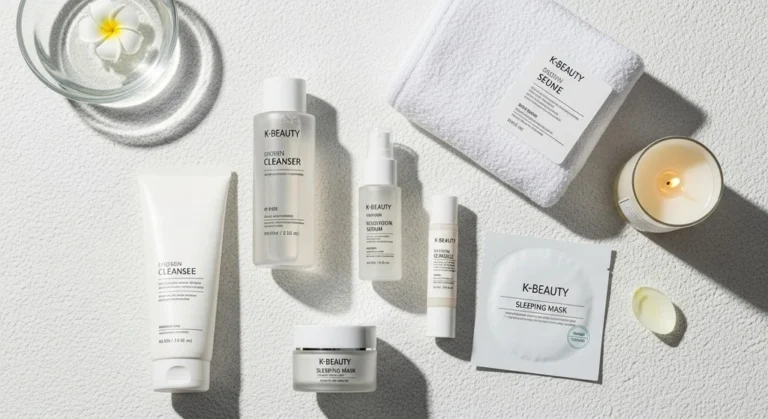
Travel has a funny way of turning a calm skincare shelf into a tiny game of luggage Tetris. You want the toner, the sleeping mask, the backup serum, and the cleanser you only use on Tuesdays. Then airport security and a very small bathroom counter bring you back to reality.
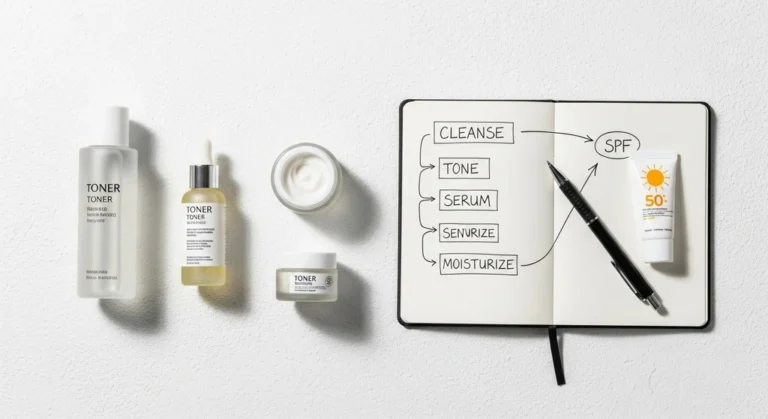
The good news is that a useful Korean skincare travel routine does not need ten steps. For a seven-day trip, four dependable products cover most situations: a gentle cleanser, one hydrating layer, a moisturizer, and sunscreen. Everything else has to earn its space.
The short packing list
- Gentle cleanser: enough for seven evening washes, plus mornings if you genuinely need it.
- Hydrating toner or serum: choose one, not both. Pick the product your skin already knows.
- Moisturizer: a texture that works under sunscreen but still feels comfortable at night.
- Broad-spectrum sunscreen: this is the item I would keep in its original container so the directions and expiration date stay visible.
If you wear long-wear makeup or water-resistant sunscreen, add a small cleansing balm or oil. That makes five products, but it solves a real problem instead of adding a decorative step. Our double-cleansing guide explains when that first cleanse is actually useful.
How much product do you really need?
| Product | Practical amount for 7 days | Best container |
|---|---|---|
| Cleanser | 20-30 ml | Leak-resistant squeeze tube |
| Toner or serum | 10-20 ml | Small pump or flip-top bottle |
| Moisturizer | 10-15 ml | Mini tube or clean jar |
| Sunscreen | Full-size or generous mini | Original packaging |
| Cleansing balm | 10-15 g, if needed | Screw-top jar |
These are planning estimates, not strict dosing instructions. Sunscreen is the exception: under-packing it usually leads to using less than you intended. Bring enough to apply it generously and reapply when your day calls for it.
A realistic morning routine on the road
- Rinse or cleanse. If your face feels comfortable in the morning, a water rinse may be enough. If it feels oily, sweaty, or coated from a heavy night cream, use your gentle cleanser.
- Apply one hydrating layer. Pat on toner or serum while skin is slightly damp. One layer is usually easier under makeup than three rushed layers.
- Use moisturizer where you need it. Dry cheeks may want a little more; an oily T-zone may need less.
- Finish with sunscreen. Give moisturizer a minute to settle first. This small pause helps reduce pilling.
This is the travel version of our five-minute Korean morning routine. It is deliberately boring. A routine you can repeat before an early train is more useful than a perfect routine you skip.
A simple evening routine
At night, remove makeup and water-resistant sunscreen, cleanse gently, apply your hydrating product, and seal it in with moisturizer. That is enough for most one-week trips.
If the hotel air feels dry, use a slightly thicker layer of moisturizer on the areas that feel tight. Do not automatically add an exfoliating pad because your skin looks dull after a flight. Cabin air, missed sleep, climate changes, and repeated cleansing can all make skin look rough temporarily.
What I would leave at home
- A brand-new active: vacation is a bad time to learn that a strong acid or retinoid does not agree with you.
- Three products with the same job: you do not need a toner, essence, ampoule, and sheet mask just to add water-binding ingredients.
- Large glass bottles: they are heavy, fragile, and usually unnecessary for one week.
- Emergency spot treatments you never use: pack the one you already tolerate, or skip the category.
- Loose sheet masks: they are optional, and the extra fragrance or unfamiliar formula can be more trouble than comfort.
Decanting without making a mess
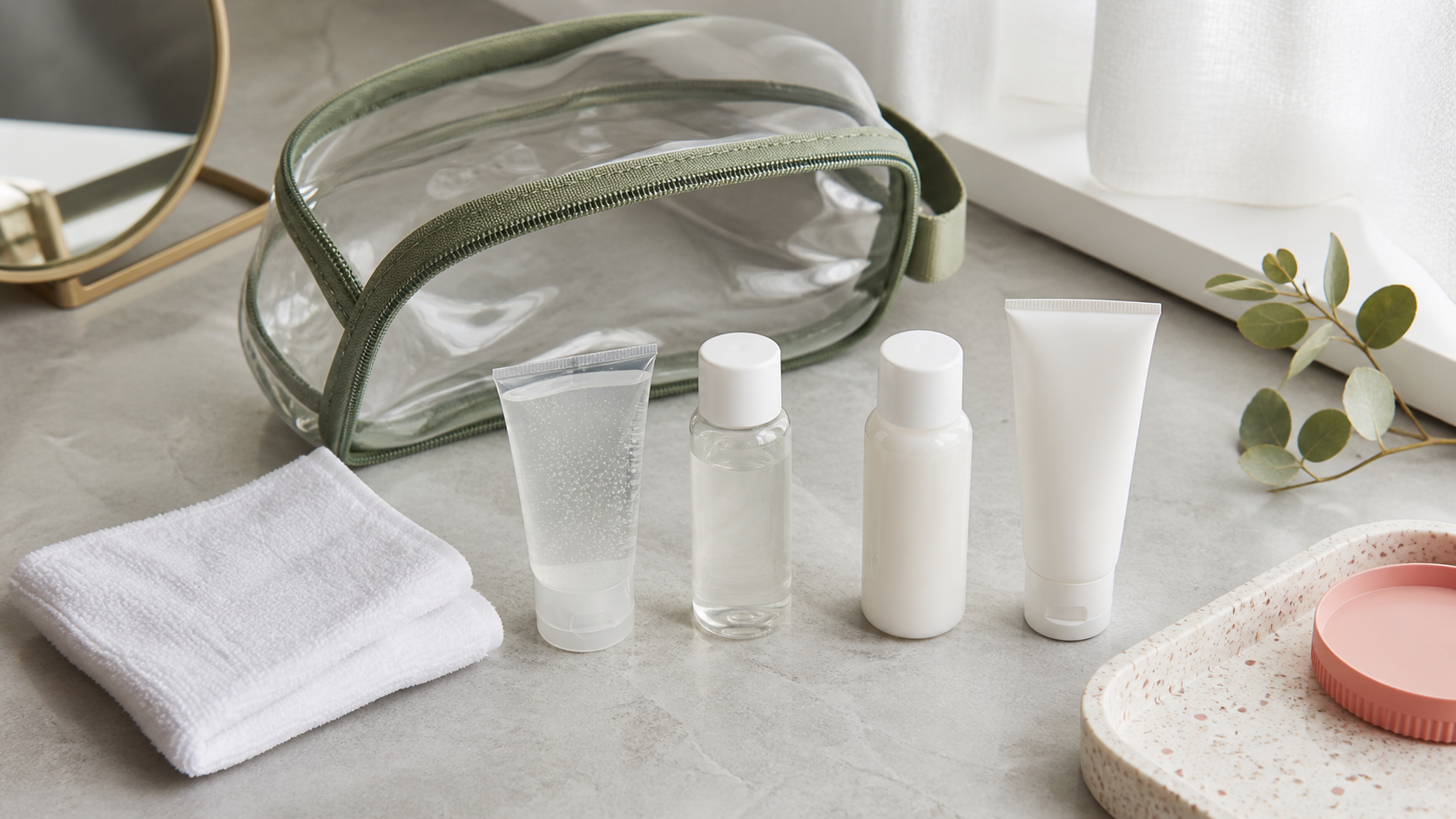
Use clean, dry travel containers and label each one before you fill it. A clear bottle of cleanser looks surprisingly similar to a clear bottle of toner at 6 a.m. Do not top up an old container indefinitely; wash and dry it completely first.
Keep products away from direct sun and a hot rental car. For formulas that are air-sensitive or packaged in special pumps, a manufacturer-made mini is a better choice than decanting. Sunscreen is also safest in its original packaging because moving it can make the formula harder to identify and use correctly.
Carry-on rules in plain English
For U.S. airport screening, liquids, gels, creams, aerosols, and pastes in carry-on luggage generally need to be in containers of 3.4 ounces (100 ml) or less and fit in a single quart-size bag. Rules can differ by country and can change, so check the airports on your actual route before packing.
Small swaps for different skin types
Oily or acne-prone skin: take a light moisturizer you already use and a cleanser that removes sunscreen without leaving your face squeaky. A harsh travel cleanser can start a cycle of tightness followed by more product layering.
Dry or dehydrated skin: choose a cream over a thin gel if air conditioning usually leaves you tight. If you are unsure which problem you have, our dry skin vs. dehydrated skin guide helps separate oil level from water loss.
Sensitive skin: familiarity matters more than novelty. Fragrance-free basics and fewer steps make it easier to identify the cause if irritation starts.
The final five-minute packing check
- Every product has a clear job.
- Every formula has been used before.
- Caps close tightly and pumps are locked.
- Sunscreen is generous enough for the whole trip.
- The routine works in four steps when you are tired.
A travel routine is not a miniature version of your entire bathroom. It is a short, reliable system that keeps your skin comfortable while the rest of your schedule changes. Pack the basics, enjoy the trip, and let the complicated routine wait at home.