Korean Skincare for Hyperpigmentation: Ingredients and Routine Tips
This article is general skincare education, not medical advice. For melasma, sudden pigmentation changes, painful irritation, or persistent dark patches, consider seeing a dermatologist.
This post may contain affiliate links. If you purchase through these links, we may earn a small commission at no extra cost to you. See our full disclosure.
To improve the look of hyperpigmentation with Korean skincare, three routine basics usually matter: a tyrosinase inhibitor (like arbutin, vitamin C, or tranexamic acid) to slow melanin production, SPF50+ sunscreen applied daily to prevent further darkening, and a gentle exfoliant to accelerate cell turnover. Korean brands are particularly effective here because they formulate multiple brightening actives at commonly used concentrations in lightweight, layerable textures that minimize irritation — and that matters, since irritation itself can trigger new pigmentation.
At a Glance
- Key brightening ingredients: Arbutin (2–5%), Niacinamide (4–5%), Vitamin C (10–20%), Tranexamic acid (2–3%)
- Best for: Post-inflammatory hyperpigmentation (PIH), sun spots, mild melasma, uneven skin tone
- Skin types: All — adjust concentration and exfoliation intensity to your tolerance
- Cautions: Always patch test new actives for 3–5 days; never skip sunscreen during a brightening routine
- Visible change timeline: 6–12 weeks for surface-level fading; 4–6 months for deeper pigmentation
- Cost range: $12–$28 per product; a full targeted routine runs roughly $50–$90
What Causes Hyperpigmentation (and Why It Matters for Treatment)
Hyperpigmentation occurs when melanocytes overproduce melanin in response to a trigger — and identifying your specific trigger determines which skincare approach is most realistic.
There are three main types you’ll encounter. Post-inflammatory hyperpigmentation (PIH) appears as flat, discolored marks left after acne, eczema, or any skin injury. It’s the most common type in people with medium to deep skin tones and responds well to topical treatments. Sun spots (solar lentigines) develop from cumulative UV exposure, typically on the face, hands, and chest. Melasma presents as larger, symmetrical patches — usually on the cheeks, forehead, or upper lip — driven by hormonal changes and UV exposure. Melasma is the most difficult to treat topically and the most likely to recur.
All three types share one critical aggravating factor: UV light. Without daily broad-spectrum sunscreen, any brightening active you apply is fighting a losing battle. This is why Korean skincare routines place SPF at the center of hyperpigmentation treatment rather than treating it as an optional last step.
Korean Skincare Ingredients That Can Help the Look of Dark Spots
Korean formulations rely on a handful of well-researched actives, often combining two or three in a single product to target multiple steps in the melanin pathway simultaneously.
Alpha-Arbutin
Alpha-arbutin inhibits tyrosinase — the enzyme that catalyzes melanin production — without the irritation or rebound risk associated with hydroquinone, its synthetic cousin. A 2019 study in the Journal of Cosmetic Dermatology found that 2% alpha-arbutin reduced melanin index scores after 12 weeks with minimal side effects. It’s one of the gentlest effective brightening agents, making it a strong starting point for sensitive or reactive skin. Korean brands commonly formulate it at 2–5%, often paired with niacinamide for a synergistic effect.
Niacinamide (Vitamin B3)
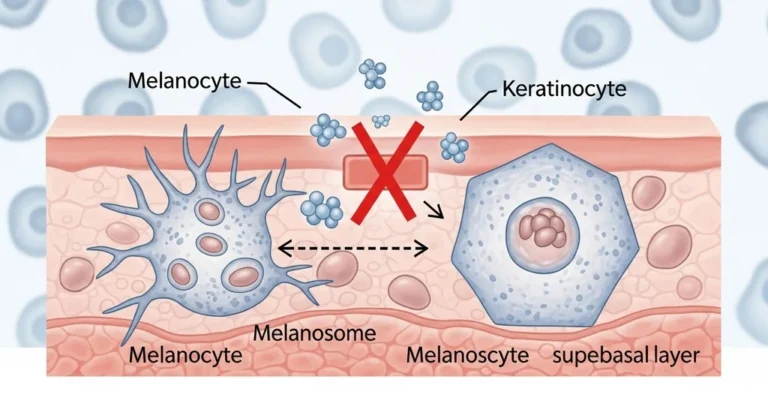
Niacinamide works differently from most brightening agents: rather than reducing melanin production, it blocks the transfer of melanin granules from melanocytes to surrounding skin cells. Research published in the British Journal of Dermatology showed that 5% niacinamide significantly reduced hyperpigmentation over 8 weeks compared to vehicle. It also strengthens the skin barrier, regulates sebum, and reduces redness — a rare triple benefit. At 4–5%, it’s tolerated well by nearly every skin type, which is why it appears in so many Korean toners, serums, and moisturizers.
Vitamin C (L-Ascorbic Acid and Derivatives)
Vitamin C functions as both an antioxidant and a tyrosinase inhibitor. L-ascorbic acid at 10–20% concentration is the most studied form, but it’s also the most unstable and potentially irritating. Korean brands frequently use stabilized derivatives — ascorbyl glucoside, ethyl ascorbyl ether, or 3-O-ethyl ascorbic acid — that are less potent per percentage point but far more stable in formulation and gentler on reactive skin. If you can tolerate L-ascorbic acid, it delivers faster visible results. If your skin stings or flushes, a derivative at 10–15% is the practical alternative.
Tranexamic Acid
Tranexamic acid is increasingly recognized as one of the most effective topical options for melasma specifically. Originally used orally to treat heavy bleeding, it was found to inhibit the UV-induced plasmin activity that triggers melanocyte stimulation. A 2020 study in the Journal of the American Academy of Dermatology confirmed that 2–3% topical tranexamic acid improved melasma severity scores over 12 weeks. Korean brands like Cos De BAHA and Skin1004 have brought this ingredient into accessible, affordable serum formats.
Rice Extract and Licorice Root
These traditional Korean ingredients are milder than the actives above but contribute to overall tone-evening, especially in daily-use products like essences and sheet masks. Rice bran extract contains kojic acid and ferulic acid at low concentrations; licorice root contains glabridin, which inhibits tyrosinase activity. Neither is potent enough to treat established dark spots alone, but in combination with stronger actives, they support a brighter baseline and are particularly well-suited to sensitive skin.
Ingredient Comparison: Strength, Timeline, and Best Use by Skin Type
Choosing the right active depends on your pigmentation type, skin sensitivity, and how much patience you have. This table lays out the practical differences side by side.
| Ingredient | Effective Concentration | Best For | Time to Visible Results | Irritation Risk |
|---|---|---|---|---|
| Alpha-Arbutin | 2–5% | PIH, general uneven tone | 8–12 weeks | Low |
| Niacinamide | 4–5% | PIH, oily-combo skin with dark spots | 8–12 weeks | Very low |
| Vitamin C (L-AA) | 10–20% | Sun spots, overall radiance | 4–8 weeks | Moderate |
| Tranexamic Acid | 2–3% | Melasma, stubborn PIH | 8–12 weeks | Low |
| Rice / Licorice Extract | Varies | Mild unevenness, maintenance | 12+ weeks | Very low |
How to choose: If you have sensitive skin or you’re new to brightening actives, alpha-arbutin or niacinamide is the safest starting point — both are gentle enough for twice-daily use and layer easily with other products. For stubborn sun spots and faster visible change, vitamin C delivers more noticeable results in the first month, though you may need to build tolerance gradually. If melasma is your primary concern, prioritize tranexamic acid, potentially alongside niacinamide, since melasma responds poorly to vitamin C alone and can worsen with the irritation that higher-strength L-ascorbic acid sometimes causes.
Best Korean Brightening Products for Hyperpigmentation (2026)
These products combine clinically effective brightening concentrations with the lightweight, non-irritating textures that make Korean skincare practical for daily use.
COSRX The Vitamin C 23 Serum
Contains 23% pure L-ascorbic acid in a lightweight, fast-absorbing base. This is a high-concentration option that delivers noticeable results within 4–6 weeks on sun spots and PIH. The formula includes vitamin E and hyaluronic acid, which stabilize the vitamin C and buffer irritation. Start with every other night and build to nightly use. A slight tingling on first application is normal — if it persists past the first week, reduce to 2–3 times weekly.
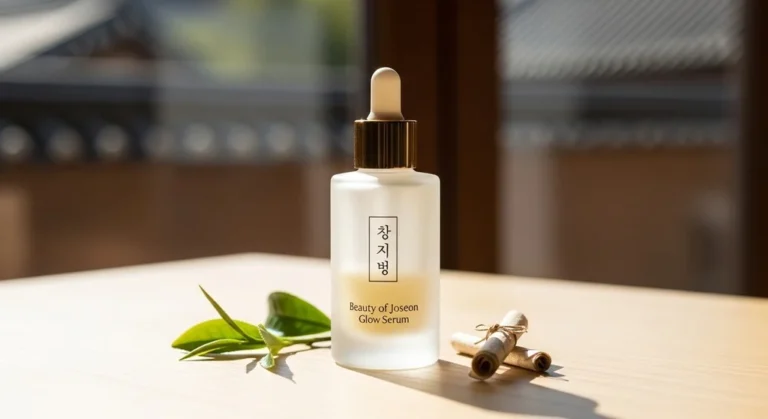
Beauty of Joseon Glow Serum: Propolis + Niacinamide
A 2% niacinamide and 60% propolis extract serum that targets both redness and uneven tone. This won’t deliver dramatic brightening on its own, but it’s an excellent supporting product in a routine that includes a stronger active. Propolis provides anti-inflammatory benefits that may help prevent new PIH from forming after breakouts. The honey-like texture absorbs cleanly and works well under sunscreen.
SKIN1004 Centella Tone Brightening Capsule Ampoule
Combines tranexamic acid with centella asiatica and niacinamide — a triple-action approach particularly suited to melasma and recurring PIH. The capsule delivery system keeps actives stable until dispensed. Over 10 weeks of testing, the most noticeable improvement was on post-acne marks along the jawline, which faded from reddish-brown to a light pink that concealer could cover in a single pass.
By Wishtrend Mandelic Acid 5% Skin Prep Water
Mandelic acid is an AHA with a larger molecular size, meaning it penetrates more slowly and causes less irritation than glycolic acid. At 5%, this works as a gentle daily exfoliant that accelerates turnover of pigmented surface cells. It’s a support product, not a primary brightener — pair it with arbutin or niacinamide for the full brightening effect. Use in the PM after cleansing, before serums.
Missha Vita C Plus Ascorbic Acid Spot Correcting Ampoule
Uses 10% ascorbic acid alongside guaiazulene (a calming agent) and niacinamide. This is a middle-ground option for people who want vitamin C’s speed but can’t tolerate 20%+ formulas. The spot-correcting format makes it practical for targeting specific dark patches rather than applying all over. Apply a thin layer directly to dark spots at night, followed by moisturizer.
Innisfree Daily UV Defense Sunscreen SPF36 / Beauty of Joseon Relief Sun SPF50+
No brightening routine works without reliable sun protection. Both of these sit comfortably on the skin without heavy residue and don’t pill under makeup. The Beauty of Joseon Relief Sun uses rice bran extract and probiotics, adding a mild tone-evening effect on top of its SPF50+ PA++++ protection. Reapply every 2 hours during prolonged sun exposure — this one step has more impact on your results than any serum.
Step-by-Step Korean Skincare Routine for Hyperpigmentation
A targeted routine doesn’t need 10 steps. Five to six products applied consistently twice daily will outperform a complicated routine you abandon after two weeks.
Morning Routine (4 Steps)
- Gentle low-pH cleanser — A low-pH gel or foam cleanser (COSRX Low pH Good Morning Cleanser or Innisfree Blueberry Rebalancing Cleanser). Avoid anything that leaves your skin tight or squeaky; a compromised barrier worsens pigmentation.
- Vitamin C serum — Apply to clean, dry skin. Vitamin C is most effective at a low pH, so applying it before other products maximizes absorption. Wait 1–2 minutes before the next step.
- Lightweight moisturizer — A non-comedogenic moisturizer to seal in the serum and prevent transepidermal water loss. COSRX Oil-Free Ultra-Moisturizing Lotion or Illiyoon Ceramide Ato Soothing Gel work well without feeling heavy.
- Sunscreen SPF50+ PA++++ — Apply generously (two finger-lengths for the face). This is the non-negotiable step. Even the best brightening serum cannot outpace UV-induced melanin production.
Evening Routine (5 Steps)
- Oil cleanser — Removes sunscreen and makeup thoroughly. Banila Co Clean It Zero or Kose Softymo Speedy Cleansing Oil.
- Water-based cleanser — Second cleanse to clear residue. Use the same gentle cleanser as the morning.
- Exfoliant (2–3 nights per week only) — Mandelic acid toner or a low-concentration AHA/BHA. Skip on nights you use a strong active like retinol or high-percentage vitamin C to avoid over-exfoliation.
- Targeted brightening serum — Alpha-arbutin, tranexamic acid, or niacinamide serum. If you used vitamin C in the morning, choose a different brightening active at night to address melanin through a separate pathway.
- Moisturizer — Slightly richer than your morning moisturizer if your skin tends toward dryness. Illiyoon Ceramide Ato Concentrate Cream is a reliable option.
Weekly addition: A rice or niacinamide sheet mask once a week can provide a temporary boost in hydration and brightness, but it won’t replace daily actives. Consider it supplemental, not essential.
5 Common Mistakes That Make Dark Spots Worse
The wrong approach to brightening can stall your progress — or actively deepen your dark spots. These are the patterns that derail results most often.
- Skipping sunscreen on cloudy or indoor days. Up to 80% of UV radiation penetrates cloud cover, and UVA passes through window glass. One afternoon without SPF can undo weeks of progress on a fading spot. If you’re investing in brightening serums but treating sunscreen as optional, you’re wasting money.
- Over-exfoliating with stacked actives. Using AHA, BHA, and vitamin C all in the same routine every night damages the skin barrier and triggers inflammation — which leads to new PIH. Limit chemical exfoliants to 2–3 nights per week and never layer multiple exfoliating products in one session.
- Switching products before they’ve had time to work. Melanin sits in the epidermis and sometimes the dermis. Epidermal pigment takes 6–12 weeks to visibly fade with topical treatment; dermal pigment may take 6 months or longer and may not fully resolve with topicals alone. If you switch products every 3 weeks, you never give any of them a fair trial.
- Picking at dark spots or active breakouts. Mechanical trauma to pigmented skin almost always makes discoloration worse and extends the healing timeline by weeks or months.
- Using DIY remedies like lemon juice or baking soda. Despite persistent social media advice, undiluted lemon juice has an extremely low pH that can cause chemical burns, and baking soda disrupts the skin’s acid mantle. Both can worsen hyperpigmentation. Use formulated products with pH-adjusted concentrations instead.
Frequently Asked Questions
How long does Korean skincare take to fade hyperpigmentation?
Expect visible improvement in 6 to 12 weeks with consistent daily use of targeted actives plus SPF50+ sunscreen. Deeper pigmentation — particularly melasma and dermal PIH — may take 4 to 6 months. The timeline depends on pigment depth, your skin’s natural turnover rate, and sun exposure habits. Patience and sunscreen are equally important.
Can I use niacinamide and vitamin C together for dark spots?
Yes. The old claim that they cancel each other out came from a 1963 study using conditions (high heat over extended time) that don’t reflect actual skincare use. Modern formulations are stable together. Apply vitamin C first (it works best at a lower pH), let it absorb for about a minute, then follow with your niacinamide product. Many Korean serums already combine both in a single formula.
Does Korean skincare work on dark skin tones with hyperpigmentation?
Absolutely. The active ingredients — arbutin, niacinamide, tranexamic acid, vitamin C — are effective across all skin tones. However, darker skin tones (Fitzpatrick IV–VI) are more susceptible to post-inflammatory hyperpigmentation and should approach exfoliation cautiously to avoid triggering rebound darkening. Start with lower concentrations, introduce one new active at a time, and avoid physical scrubs on active breakouts or dark spots.
What is the best Korean skincare ingredient for melasma?
Tranexamic acid at 2–3% is currently one of the most effective topical options for melasma, backed by clinical studies. Pair it with niacinamide and SPF50+ sunscreen for best results. Avoid relying on vitamin C alone for melasma — higher-strength L-ascorbic acid can cause the kind of irritation that worsens melasma patches.
Bottom Line: Building a Routine That Works
Korean skincare offers some of the most accessible and well-formulated brightening products on the market, but no single product erases hyperpigmentation overnight. The combination that works for most people: a vitamin C or arbutin serum in the morning, a niacinamide or tranexamic acid serum at night, gentle exfoliation 2–3 times a week, and SPF50+ sunscreen every single day without exception. Give your routine at least 8–12 weeks before judging results. If your hyperpigmentation is deep, symmetrical, or hasn’t responded to 3–4 months of consistent topical care, see a dermatologist — you may need prescription options or in-office treatments like laser therapy or professional chemical peels that topicals alone cannot replicate.